We built Mozrat because the brief-to-score gap is broken
Ad agencies wait three days for a first composer draft — and the first draft is never what the client approved in the brief. Game studios blow their audio budget before they hit beta. Content creators pay per track and still sound like everyone else's royalty-free playlist. Mozrat started in 2023 to close that gap. Not with a better stock library. Not with a consumer toy that outputs mixed MP3s. With a generation model that returns the individual stems post-production actually needs.
Founders
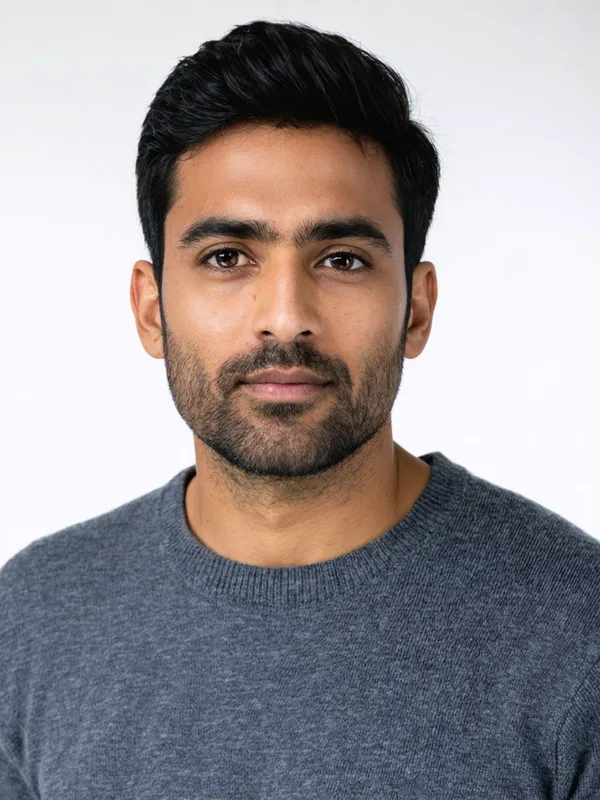
Sundar Arvind
CEO & Co-Founder
Sundar spent five years at a London post-production house supervising music licensing for broadcast television clients. He watched agency after agency pay £2,500–£4,000 for a composer revision cycle, receive a mixed master the client rejected at the final review, then repeat. The bottleneck wasn't talent — it was the delivery format. Mozrat is his answer to that workflow.
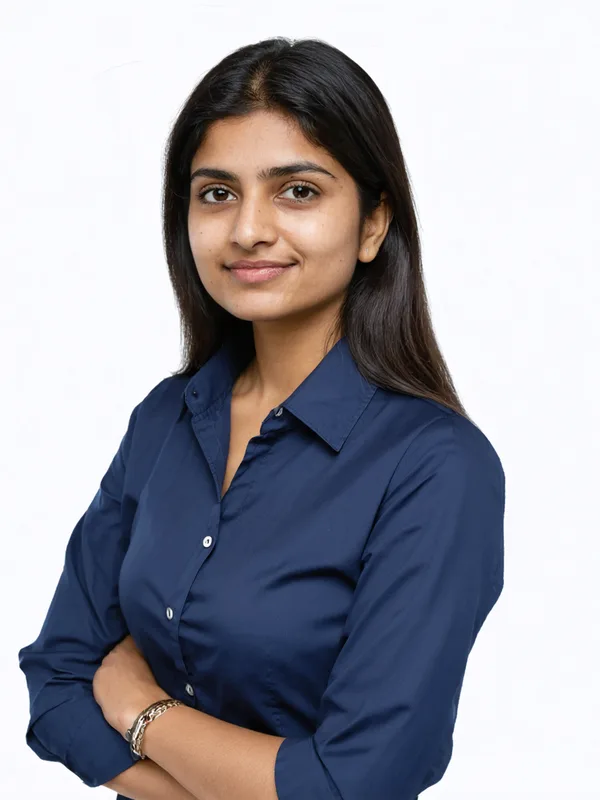
Priya Nair
CTO & Co-Founder
Priya's background is in generative audio research. Her PhD focused on transformer architectures for polyphonic music synthesis — specifically the problem of generating harmonically coherent multi-track output, not just single-voice melody. That research is the foundation for Mozrat's stem isolation approach. She leads model development.
How we think about music generation
Stems over songs
Any generation tool can output a mixed file. Delivering four genuinely independent stems — where the harmony doesn't bleed into the melody, where the rhythm track loops cleanly without the mix — is the hard problem we chose to solve.
Professional, not consumer
Mozrat is built for people who know what a sync license is, why 24-bit WAV matters for conform, and why a "stems" export from a consumer tool isn't actually stems. We don't trade precision for a simpler onboarding screen.
London-independent
We're bootstrapped, based in Shoreditch, and not running a roadmap dictated by investor pivot requests. If a feature doesn't make the stems better, it doesn't ship.